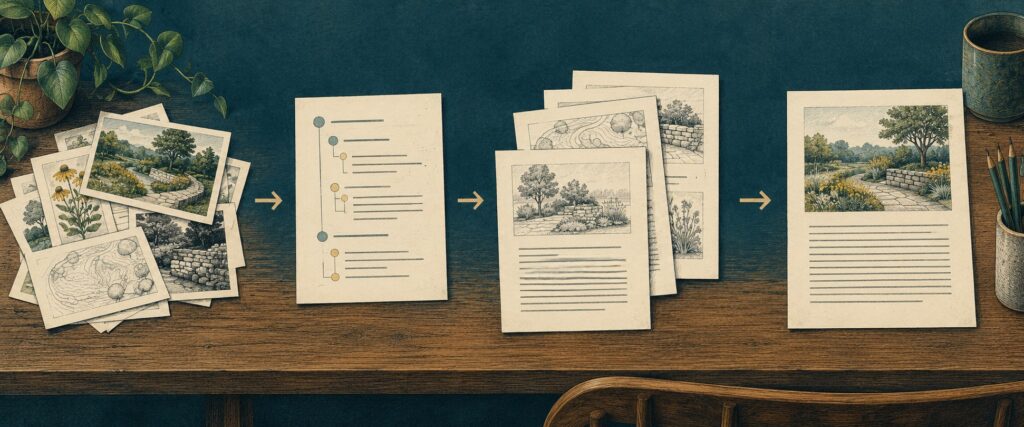
From a collected idea to a WordPress draft
The Idea Journal now has a more complete route from collected material to a WordPress draft. The interesting part is not simply asking a model to write an article. It is keeping the source material, idea and successive writing stages connected while giving the operator somewhere to inspect and manage the work.
Keeping sources with the idea
Incoming sources can be filtered, deduplicated and matched against tracked ideas. Matching attempts to attach related material to an existing idea rather than producing a new item for every source. I have been refining both duplicate handling and the matching logic, as well as reducing the size of Reddit and Journal payloads. Smaller payloads matter when the same material moves through several stages of processing.
Writing in stages
The drafting system builds an outline, writes sections and assembles them into a post. Separate metadata generation adds another stage around the body, and the workflow also gained featured-image generation. The stages make it possible to handle the shape of an article and its supporting fields separately instead of relying on one response to do everything.
In the admin interface a draft wizard and session model coordinate the work. The operator can choose settings such as author, category and draft status, and attach an image as part of the workflow. Idea categories, status filters and soft deletion make the growing list of ideas easier to manage.
What a draft does and does not prove
Creating a draft is a useful milestone, not an editorial sign-off. Sources can be incomplete, a match can be wrong and generated prose can misrepresent what the evidence supports. Verification, editing and a decision to publish remain separate responsibilities even when much of the assembly is automated.